


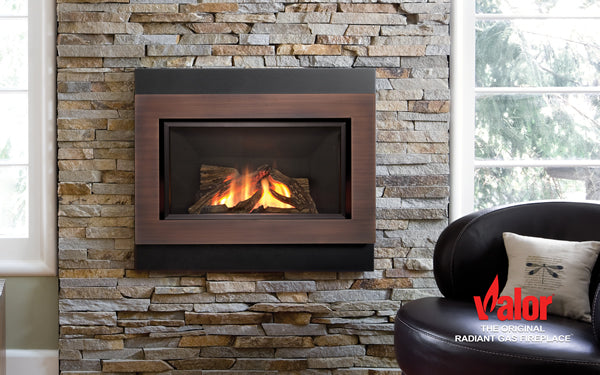


A traditional open fireplace is usually not an efficient heating system for a Canadian home. It may feel warm when you sit close to the flame, but the house can still lose heat overall. The reason is airflow. An open fireplace pulls already-heated indoor air into the fire and sends it up the chimney. Cold outdoor air then enters the home through gaps, vents, windows, doors, basements, and other weak points.

That is why old fireplaces can look beautiful but perform poorly. In Canadian winter conditions, the weakness becomes more obvious. Wind, cold chimneys, damp wood, pressure changes, and poor draft all work against the system.
For real heat, most homeowners are better served by a fireplace insert or a sealed direct-vent gas fireplace. Electric fireplaces can work well for condos, bedrooms, media walls, or light comfort, but they should not be treated as the same type of heating upgrade.
Table of Contents
- Why open fireplaces lose heat
- Why this matters more in Canada
- Open fireplace vs fireplace insert
- Direct-vent gas vs electric fireplaces
- Backdrafts, cold air plugs, and smoke
- Creosote and chimney fire risk
- Critical stop block
- What to do instead
- Fireplace upgrade checklist
- FAQ
Why Open Fireplaces Lose Heat
An open fireplace feels convincing. You see the flame, hear the wood, and feel heat on your hands. It looks like the room is being warmed.
But a fireplace is also breathing.
A wood fire needs air. In an open fireplace, that air usually comes from the room itself. The furnace has already warmed that air. Then the fireplace pulls it toward the flame and sends it up the chimney with the smoke.
Once indoor air leaves, the house has to replace it. In winter, that replacement air comes from outside. It can enter through window frames, basement gaps, attic hatches, door seals, vents, and wall penetrations.
This is why the person sitting near the fire may feel warm while the rest of the house feels cooler. The kitchen feels drafty. Upstairs loses comfort. The furnace runs more often. After the fire dies down, heat may continue escaping if the damper is old, warped, dirty, or poorly sealed.
The issue is the design. A traditional open fireplace is not a sealed heating appliance. It is a large opening connected to the outdoors.

Why This Matters More in Canada
Open fireplaces are inefficient in many places, but Canadian conditions make the problem harder to ignore.
In southern Ontario, dampness is a common issue. Around Lake Ontario, chimneys sit through long wet shoulder seasons. Masonry absorbs moisture. Dampers corrode. Caps age. A fireplace that looks fine from the room may have a cold, damp chimney above it.
In Alberta, wind is often the bigger problem. A fireplace that works on a calm evening may smoke or hesitate during strong gusts. Calgary’s Chinook swings can also create sudden temperature changes that affect draft and condensation.
In colder prairie or northern conditions, the chimney can become difficult at startup. If a masonry chimney has been unused in deep cold, it may hold a column of dense cold air. Light a fire underneath it and smoke may not rise immediately.
Modern homes add another complication. Tighter windows and better insulation are useful, but they also make pressure behaviour more noticeable. Range hoods, dryers, bathroom fans, HRVs, and central vacuums all move air. If they pull enough air out of the home, an open fireplace may struggle to draft.
A fireplace is not working alone. It is interacting with the whole house.
Open Fireplace vs Fireplace Insert
A fireplace insert is not just a cosmetic update. It changes how the system works.
An open fireplace is basically a fire in a masonry cavity. A fireplace insert places a controlled appliance inside that space. It may burn wood, gas, or pellets, depending on the model. The aim is to control combustion, reduce uncontrolled air loss, and send more usable heat back into the room.
| Feature | Open Fireplace | Fireplace Insert |
|---|---|---|
| Main value | Ambience | Heat plus ambience |
| Heat performance | Usually poor | Much stronger when properly installed |
| Air control | Very limited | Controlled combustion |
| Draft behaviour | Sensitive to wind and pressure | More stable |
| Heat delivery | Mostly near the flame | Radiant and convective heat |
| Winter usefulness | Often inconsistent | Better suited to cold weather |
A good insert can make an old fireplace useful again. It can also reduce the feeling that the fire is eating warm air from the room.
Still, an insert is not a casual drop-in product. The chimney needs to be inspected. The liner, clearances, room size, and appliance output all matter. Poor venting can make even a good appliance perform badly.
This is where professional installation matters. The installer is not only making the unit look tidy. They are checking whether the system can vent, draft, and heat safely in real Canadian conditions.

Direct-Vent Gas vs Electric Fireplaces
For many homeowners, the choice comes down to gas or electric. Both can be useful, but they do different jobs.
A direct-vent gas fireplace is a sealed combustion system. It draws combustion air from outside and vents exhaust outside. It does not depend on a large open chimney pulling room air into the fire. That makes it much more predictable in winter.
An electric fireplace is simpler. No chimney. No gas line. No wood storage. No combustion. It can be a practical choice for condos, bedrooms, offices, media walls, and decorative spaces.
The limitation is heat output. Most electric fireplaces provide light zone comfort. They are not usually the right answer for properly warming a large basement, open-plan living room, or cold main floor in February.
| Factor | Direct-Vent Gas Fireplace | Electric Fireplace |
|---|---|---|
| Heat output | Stronger, suitable for room heating | Limited, usually supplemental |
| Venting | Required | Not required |
| Fuel | Natural gas or propane | Electricity |
| Installation | More involved | Usually simpler |
| Best fit | Main rooms, basements, family rooms | Condos, bedrooms, decorative spaces |
| Main strength | Real heat with sealed combustion | Easy placement and clean operation |
The mistake is expecting both systems to do the same job. For detached homes with gas access, direct-vent gas is often the more serious heating choice. For condos or spaces where venting is not possible, electric may be the practical one.
Backdrafts, Cold Air Plugs, and Smoke
A fireplace that smokes is telling you that air is not moving the way it should.
Smoke should go up. If it does not, the draft may be weak, blocked, reversed, or disrupted by pressure inside the house.
Common causes include:
- cold chimney
- damp wood
- dirty or restricted flue
- poor chimney height
- wrong cap or termination
- strong wind
- oversized flue
- kitchen fan, dryer, or bathroom fan pulling air from the home
- tight house with not enough make-up air
Backdraft happens when air comes down the chimney instead of going up. It can bring smoke, odour, ash smell, and cold air into the room. Sometimes it happens only in certain weather, which makes it easy to dismiss.
A cold air plug is another common Canadian issue. Cold, dense air sits inside the chimney like a stopper. When the homeowner lights a fire, the smoke tries to rise but meets that heavy column of cold air. Until the flue warms, smoke may spill into the room.
Some people warm the flue first with a small flame or rolled newspaper near the damper. That can help. But if the fireplace needs tricks every time, there may be a deeper draft, cap, sizing, or pressure issue.
Smoke entering the home should not be treated as normal.
Creosote and Chimney Fire Risk
Creosote is one of the hidden risks of poor fireplace performance.
When wood burns poorly, smoke carries unburned material into the chimney. As that smoke cools, it leaves deposits on the chimney walls. That residue is creosote. It can be flaky, sticky, shiny, crusty, or tar-like.
It is also flammable.
Creosote builds faster when fires are cool and smoky. This often happens with damp wood, weak draft, cold chimneys, oversized open fireplaces, low smouldering fires, and long gaps between chimney cleanings.
This is why occasional fireplace use can still be risky. A homeowner may say, “We only use it a few times each winter.” But if those few fires are smoky and slow-burning, deposits can still build.
A better fire is hotter, cleaner, and made with properly seasoned wood. But good wood does not replace chimney inspection and cleaning.

Critical Stop Block
Some fireplace situations should not be patched casually. They need a proper assessment or upgrade.
| Situation | Why It Fails | Better Direction |
|---|---|---|
| Open fireplace used as main heat source | Pulls too much heated indoor air out | Consider an insert |
| Smoke enters the room often | Draft, pressure, chimney, or fuel problem | Get the system inspected |
| Fire smokes when kitchen fan runs | House may be depressurized | Review make-up air |
| Exterior chimney in deep cold | Cold air plugs are more likely | Consider insert, liner, or direct-vent |
| Damp wood burned slowly | More smoke and creosote | Use seasoned wood and burn hotter |
| Electric fireplace expected to heat large basement | Output is usually too limited | Consider gas or a proper insert |
| Old damper does not seal | Heat escapes even when unused | Repair, seal, or upgrade |
| DIY insert into unknown chimney | Venting and clearance risks | Use qualified installation |
A fireplace that only works on calm days, with dry wood, no fans running, and a perfectly warmed flue is not a reliable heating system. It is a fragile setup.
What To Do Instead
The right upgrade depends on what the homeowner wants from the fireplace.
If the goal is real heat, look at an insert first. A gas insert is usually the easier everyday option. It suits homeowners who want warmth without hauling wood, storing fuel, cleaning ash, or managing a fire.
A wood insert can produce strong heat, but it suits a different owner. You need dry fuel storage, regular cleaning, ash handling, and proper burning habits. For someone who likes wood heat, it can be excellent. For someone who wants push-button convenience, gas usually makes more sense.
If the old chimney is the problem, a direct-vent gas fireplace may be better than spending money trying to rescue a poor masonry setup. Because direct-vent units use sealed combustion, they avoid many of the pressure and air-loss problems that come with open fireplaces.
If the home is a condo, electric may be the realistic choice. Many condo buildings restrict wood burning, propane storage, open flame appliances, or exterior vent changes. Electric gives visual warmth and light comfort without combustion.
If the fireplace smokes, do not decorate around the problem. Smoke means the system is not behaving properly. The chimney, cap, flue, damper, wood quality, room pressure, and nearby exhaust fans may all need to be reviewed.
Fireplace Upgrade Checklist
| Question | Why It Matters |
|---|---|
| Do I want atmosphere or heat? | These are different buying decisions |
| Is the current fireplace open masonry? | It may be losing heat rather than adding it |
| Does the fireplace ever smoke? | That points to draft or pressure concerns |
| Is the chimney exterior? | Exterior chimneys are harder to start in winter |
| Has the flue been inspected? | Inserts need safe venting |
| Is natural gas available? | Gas inserts become easier to consider |
| Is the home a condo? | Rules may limit fuel options |
| Do large exhaust fans run nearby? | They can disrupt draft |
| Is the wood properly seasoned? | Wet wood creates smoke and creosote |
| Who will install the upgrade? | Fireplace performance depends heavily on installation |
FAQ
Why does my fireplace make the house colder?
Because an open fireplace pulls warm indoor air into the fire and sends it up the chimney. The house then replaces that air with cold outdoor air from leaks and gaps.
Is an open fireplace good for heating?
Usually, no. It is better for atmosphere than heat. It can warm the area near the flame, but it is not an efficient way to heat a Canadian home.
Is a fireplace insert worth it?
Often, yes. A properly installed insert can make an old fireplace much more useful by improving heat output and reducing uncontrolled air loss.
Is gas better than wood?
Gas is easier and more predictable. Wood can produce strong heat, but it needs dry fuel, more cleaning, and more hands-on operation.
Are electric fireplaces useful?
Yes, within limits. They are good for condos, bedrooms, offices, and decorative spaces. They are usually not the best option for heating a large room in serious cold.
Why does smoke come into the room when I start a fire?
The chimney may be cold, the wood may be damp, the house may be depressurized, or the draft may be weak. If it happens often, the fireplace should be inspected.
What is creosote?
Creosote is a flammable residue from wood smoke. It builds up inside chimneys when smoke cools and condenses. Damp wood and smoky fires make it worse.
What is the best upgrade for a Canadian home?
For real heat, usually a fireplace insert or direct-vent gas fireplace. For condos or decorative use, electric may be more practical. The right answer depends on the home, chimney, fuel access, and local rules.