


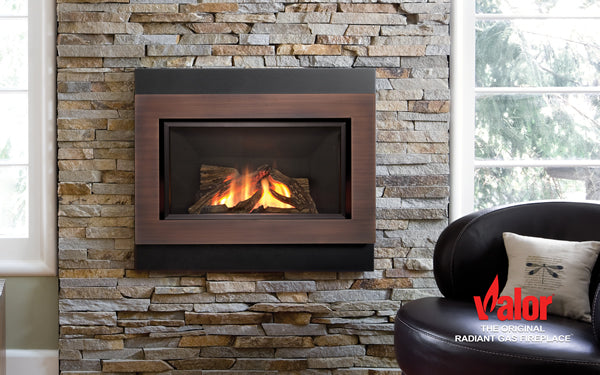


If you have a gas fireplace in your home, learning more about it is in your best interest. What follows is a brief summary of several gas fireplace safety topics that get asked frequently. If you have questions about the operation of your gas fireplace, then check out this article. We think it will be worth it! As always, we have fireplace experts in each Barbecues Galore location, and our ‘must-see’ showrooms include beautiful displays of Electric and Gas Fireplaces so you can see the differences for yourself, and find the right fit to make your home warm and cozy.
Proudly trusted by Canadian homeowners to install and service their fireplaces since 1979.

Q: WHICH IS SAFER, A GAS OR WOOD-BURNING FIREPLACE?
A: We would not say that either is “safer” than the other.
Properly installed, correctly operated, and regularly maintained, a fireplace is as safe as the toaster on your kitchen counter! That’s why having an experienced, certified professional install your hearth appliance is so important. They are familiar with the manufacturer’s requirements and all applicable codes.
However, it’s certainly worth noting that there is much greater room for “operator error” with a wood-burning fireplace vs. a gas model. Most gas appliances are turned on/off with either a wall switch or a remote control. The heat output on a gas fireplace is limited and defined. But with a wood-burning fireplace, stove, or insert, the heat output can vary tremendously, and the appliance can be over-fired, causing a potentially hazardous situation. There is no doubt that burning wood and maintaining the appliance and cleaning the chimney are more involved than with a gas model. But again, adequately installed, operated, and maintained, both fuels are quite safe for use in your home or business.

Q: WILL A GAS FIREPLACE DAMAGE MY TV OR ARTWORK ABOVE IT?
A: The fireplace heat output and venting configuration can play a big part in determining how best to protect the TV. It’s well known that high temperatures and sensitive electronics are not a good mix. Consequently, a gas fireplace could damage a TV mounted above it if precautions are not taken. There are several ways to protect your big screen, photos and artwork from the fireplace.
The most efficient choice is to utilize Valor’s Heat Shift, which redirects the convective heated air above your TV, while still allowing the radiant heat to make your room feel cozy.
BLOG LINK - What is Heat Shift?
Other considerations include:
- Specific mounting systems designed to protect the TV while providing a comfortable viewing height.
- During installation, framing techniques can do the same.
- Something as simple as a mantle can help deflect the heat away from the TV.
Installation of a new fireplace takes some planning to ensure correct techniques are applied by licensed gas fitters to ensure all clearances are met, and proper materials are used.

Q: CAN A GAS FIREPLACE CAUSE HEADACHES?
A: Today’s gas fireplaces operate with a sealed combustion system. This means the venting system provides combustion air from the outside, not your room. This venting system may go through a side wall or up through the roof, or, in the case of a gas insert, it is installed in the existing fireplace’s chimney. Smoke and other by-products from combustion are also sealed within the venting system and are effectively moved outside.
Of course, a blower fan will provide warm air to your room but is never in contact with combustion gases. It’s unlikely that a gas fireplace is going to be the cause of headaches. However, you may experience unpleasant odours if pet hair and/or dust accumulates beneath the fireplace. These odours might cause a headache, as the fan can move those warmed-up smells into the living room. The answer to those unpleasant odours is to keep the compartment beneath the fireplace clean.
Q: CAN A GAS FIREPLACE CAUSE CARBON MONOXIDE?
A: Whenever something burns, carbon monoxide is present. Direct-vented gas fireplaces use a sealed combustion venting system that expels all combustion by-products to the outside, including carbon monoxide.
However, some older gas fireplaces and all gas log sets installed into a wood-burning fireplace use a different type of vent system that is not entirely sealed up. This “silent killer” is odourless, tasteless, and colourless. The best defense for a homeowner? Have your fireplace professionally serviced annually, and ensure you have carbon monoxide detectors with fresh batteries, which is not just a good idea, it’s the law.
QUICK LINK – Book a Fireplace Cleaning HERE.
Q: WHAT CAN I DO WHEN A SMELL COMES FROM A GAS FIREPLACE?
A: Assuming the smell from a gas fireplace is not the fuel itself, the odds are high that it’s related to pet hair, dust, or dander.
This is especially true when the fireplace is unused for a few months, and the compartment beneath the fireplace needs to be periodically cleaned. With dogs and cats in the house and if the fireplace has been installed on the floor vs. a raised hearth, this can be a common problem, particularly in the fall.
And it should go without saying, but we will anyway: If the odour you’re smelling is gas, DO NOT TURN THE FIREPLACE OR ANY SWITCHES ON. Ventilate the house immediately, shut off the gas supply, and/or go outside to call 911.
When a fireplace is newly installed, odours will likely come from the first few fires. These are solvents and high-temperature paints curing from the manufacturing process. The fix to this scenario is to have those initial burns done during moderate weather when a couple of windows can be opened to effectively clear the room.
Q: CAN A GAS FIREPLACE CAUSE ALLERGIES?
A: Gas fireplaces are safe, convenient, and very popular today.
Because of the sealed combustion system and the coaxial venting system used in gas fireplaces, the likelihood of a unit causing issues with most common allergies is remote.
Wood-burning equipment differs because of the inherent smoke and the possibility of a moldy wood supply. But with gas, since the fireplace’s glass is gasketed and the venting system is sealed, no room air interacts with the combustion. So, no smoke or fumes in the house.
The space below the logs and fire is readily accessible and should be kept clean of dust and pet hair. Otherwise, a blower fan will circulate warm air along with the dust and pet hair back into your living room. Since some people with allergies might react to the odours of this warm air and dust, inspecting and cleaning this area regularly is essential.
So, if you’ve made it this far, then we bet you have more questions. We are more than happy to answer them in-store. Feel free to also check out our FAQ list HERE.
QUICK LINK – If you are looking for the latest in Fireplaces, CLICK HERE.


